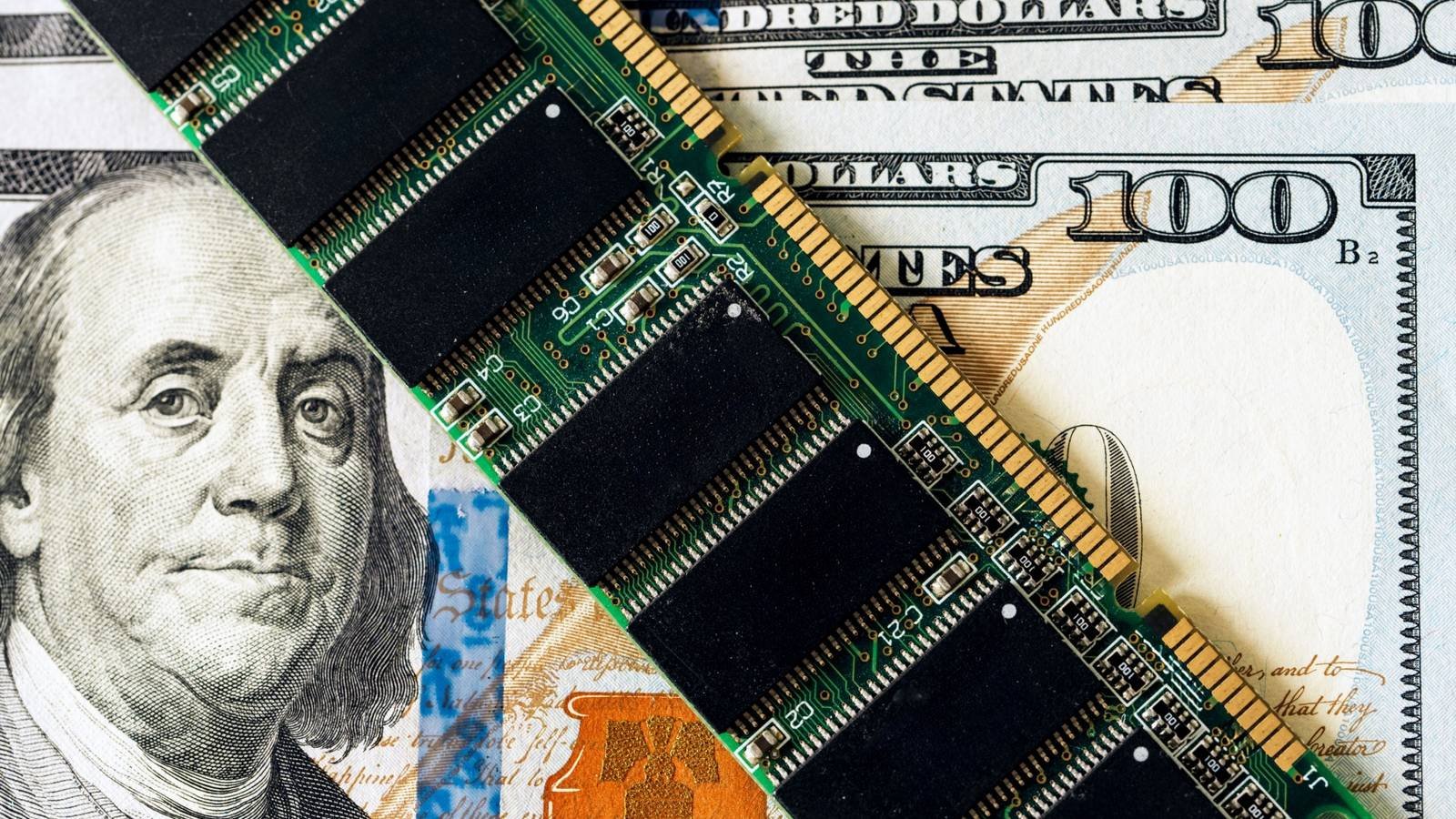
If you’re thinking about buying a new laptop or desktop, a GPU, a phone, or building a PC, I recommend doing it sooner rather than later. Thanks to AI, the price of memory has spiked, and it’s only a matter of time before every device that packs a lot of memory (or storage) is affected.

The RAM-pocalypse is upon us

Every AI company, from OpenAI to Google, Amazon, and Meta, is racing to build as many AI data centers as possible. These data centers are packing tons of GPUs, but they also need mountains of memory and storage. This has skyrocketed global demand for memory (RAM) and storage (mostly SSDs), sending RAM prices into the stratosphere and triggering a global memory shortage.
If OpenAI alone could soon devour up to 40% of global DRAM output, things get much worse when you factor other AI companies into the equation.
Unfortunately, there are only a handful of companies—Samsung, SK hynix, and Micron—that manufacture chips used in RAM sticks and SSDs, and they can’t shell out enough chips to satisfy demand. The catch is that they don’t plan to ramp up RAM nor storage production anytime soon, and even when they do, we shouldn’t expect a massive supply increase. This paints a pretty bleak picture for the next year. If the demand doesn’t deflate soon, RAM prices will remain astronomical, and could even get higher.
SSDs are mostly fine, for now, but the RAM-pocalypse is slowly spilling over to storage. As DRAM chips bring in more cash, manufacturers are shifting their production lines toward increased memory-chip output while winding down the manufacture of NAND chips used in SSDs.
While it’s now too late to buy RAM at anything resembling a normal price, you should buy an SSD as soon as possible if you need more storage.
Every device that packs memory and storage will likely be affected

Now, the problem is that a ton of electronic devices pack a lot of memory and storage. From laptop and desktop PCs, to GPUs, to gaming consoles, to handheld PCs, to phones and tablets.
Since prices are rising across the board, the regular consumer in the market for RAM or storage isn’t the only one affected. Due to being outbid by AI behemoths, major laptop and prebuilt PC vendors are planning to raise prices soon. Dell has already announced that it will increase the prices for business customers by up to 30%, and Lenovo is likely to follow in early 2026.
HP will either adjust prices or reduce the amount of memory in its laptops, or both. ASUS and Acer both plan to pass the burden to consumers, and multiple system integrators, including MAINGEAR and CyberPowerPC, have already hiked prices of their prebuilt desktop PCs.

Graphics card prices had finally reached normal levels, but then AMD raised prices of its GPUs, and now there are rumors that NVIDIA will reduce the production of its RTX 5000 GPUs in 2026 by up to 40% due to memory shortages. It looks like the GPU market’s waters are churning again; we can expect further price hikes stemming from memory shortages and a reduced supply of consumer GPUs to hit sometime in 2026.
Phones and tablets won’t be spared either. Not only will 2026 phone models (as well as laptops) come with less memory, especially budget models, but they will also be up to 10% more expensive to produce. As always, the regular people will likely be the ones to foot the bill.

Oh, I almost forgot about gaming consoles. The Nintendo Switch 2 RAM prices have risen by more than 40%, while the console’s storage has increased by 8%, leading to a massive drop in Nintendo shares. At the moment, Nintendo doesn’t plan to increase prices, but if this trend continues, the Switch 2 might get more expensive in 2026.

Sony and Microsoft expect memory alone to account for more than 35% of the bill of materials for their consoles, which could lead to price increases for the PS5, PS5 Pro, and Xbox Series X and S. This doesn’t bode well for Microsoft, since the company has increased the price of the Xbox Series consoles multiple times during 2025.


Skyrocketing RAM prices were just the beginning—these 3 PC components are next
Is now the last chance to upgrade your PC?
The prices won’t stabilize anytime soon

The worst part of the RAM-pocalypse is that it likely will not end anytime soon. SK Hynix, one of the three major memory and storage chip manufacturers, forecasts that RAM shortages will not ease up until 2028.
Micron shuttering its consumer memory and storage brand, Crucial, so the company can fully focus on business customers, is another bleak sign. It shows that we, the regular consumers, aren’t the primary—or even secondary—market for storage and memory manufacturers. AI companies come first, large businesses are served second, while the consumer market has to settle for the leftovers.
Even when memory and storage production finally ramps up, AI firms and other business clients will continue having precedence over the consumer market. In other words, even after the global memory and storage supply stabilizes, whenever that may be, there’s a good chance that prices won’t ever return to pre-RAM-pocalypse levels.
Buy that device or component as soon as possible

What I’m trying to say is that you should buy the device you’re eyeing sooner rather than later. Whether it’s a laptop, a prebuilt desktop, a GPU, a tablet, or a phone, you should snag it as soon as possible, because next year you might not only pay more for it, but also end up with less RAM or storage, or both.
When it comes to PC building, the current situation is especially ironic. While now’s the best time to purchase most PC components, RAM is so darn expensive that it can devour all the savings you might score on other components—and then some—and GPU prices could soon soar for the nth time since 2017, this time due to memory crunch and reduced production.
If you really need a new desktop PC, build it as soon as possible. The RAM-pocalypse won’t end anytime soon, and memory prices will likely continue the upward trend well into 2026. While now is a pretty bad time to build a PC, tomorrow will be worse.