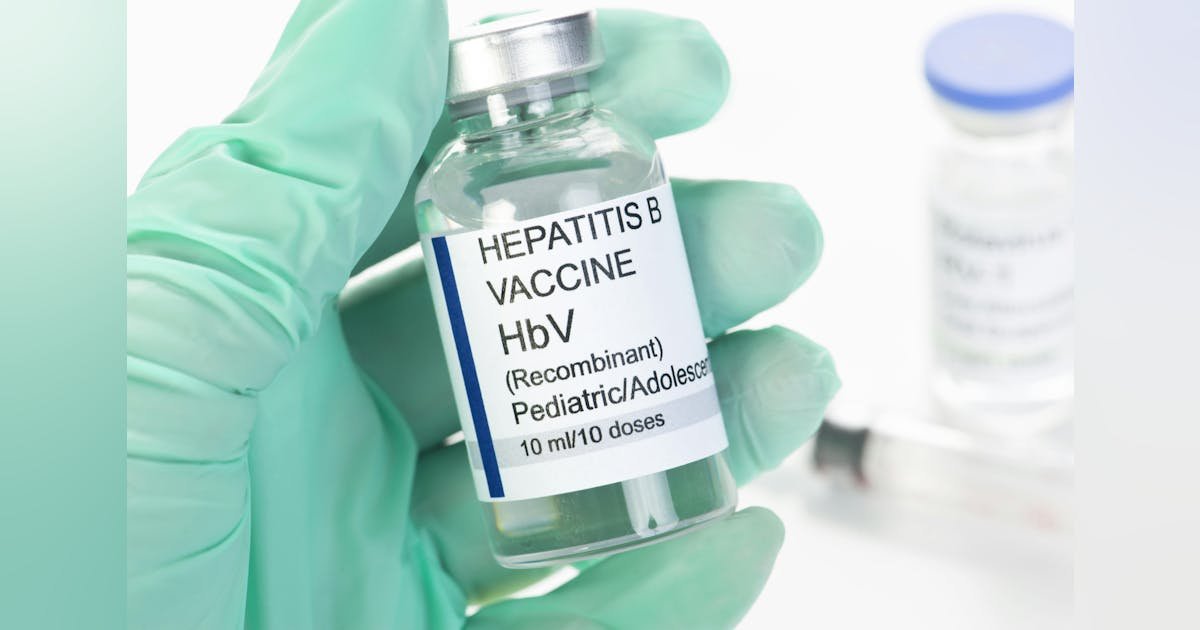
Last week, U.S. vaccine advisers abolished a long-standing recommendation that all American newborns receive the hepatitis B shot, a major policy victory for health secretary Robert F. Kennedy Jr. This decision, disease experts say, will undo decades of public health progress, as reported by Reuters’ Michael Erman, Julie Steenhuysen, and Christy Santhosh.
“The committee recommended the birth dose only for infants of mothers who test positive for the virus or whose status is unknown, replacing the 1991 universal recommendation aimed at protecting all children from hepatitis B infections,” Reuters reported.
However, Apoorva Mandavilli wrote for The New York Times, “the divisiveness and dysfunction of the committee in making the decision…raised questions about the reliability of the advisory process and left at least one critic ‘very concerned about the future’ of the Centers for Disease Control and Prevention (CDC).” “The panel, called the Advisory Committee on Immunization Practices, voted 8 to 3 that women who test negative for hepatitis B should consult with their healthcare provider and decide ‘when or if’ their child will be vaccinated against the virus at birth,” Mandavilli reported.
“Trump said earlier this week that the disease is ‘mostly’ transmitted sexually or via dirty needles,” Max Rego reported for The Hill. “Former Food and Drug Administration (FDA) Commissioner Scott Gottlieb said Sunday that President Trump’s assertions about hepatitis B transmission are ‘simply not true.’” Gottlieb explained to host Margaret Brennan on CBS News’s Face the Nation that “there’s a refrain that if you just test the moms while they’re pregnant, you can detect whether they have hepatitis B, and if they have hepatitis B, you continue to give that birth dose.” “But the reality is, many moms don’t get tested, even though they intend to, many times, those test results aren’t checked, and the tests themselves have a false negative rate, meaning they’re going to say you don’t have hepatitis B, when in fact, you do, of about 2 percent.”
Several state health officials, including health leaders from NJ, PA, MI, and CO, have spoken out against the decision. The American Academy of Pediatrics (AAP) released a statement saying that it continues to recommend giving newborns a dose of the hepatitis B vaccine within 24 hours of birth, with additional doses at 1-2 months and 6-18 months. The American Academy of Family Physicians (AAFP) stated in a news release that it strongly supports maintaining universal hepatitis B vaccination at birth, and it called on the CDC to ensure this life-saving protection remains the standard of care.
“Parents will still be able to get the hepatitis B vaccine for their children at no cost,” CNN’s Tami Luhby noted. “Two major health insurance industry groups, the Blue Cross Blue Shield Association and AHIP, reiterated…that they will continue to cover all vaccines recommended by the committee as of earlier this year, with no cost-sharing, through 2026. BCBS companies will cover all immunizations recommended by ACIP as of January 1, 2025, while operating within federal and state laws and meeting program and customer requirements, a spokesperson told CNN. AHIP members will do so for all vaccines recommended by ACIP as of September 1, 2025, a spokesperson said,” Luhby reported.
The acting director of the CDC will ultimately decide whether to approve the panel’s recommendation.

